
Masjid an-Nabawi: The Prophet's Mosque in Medina
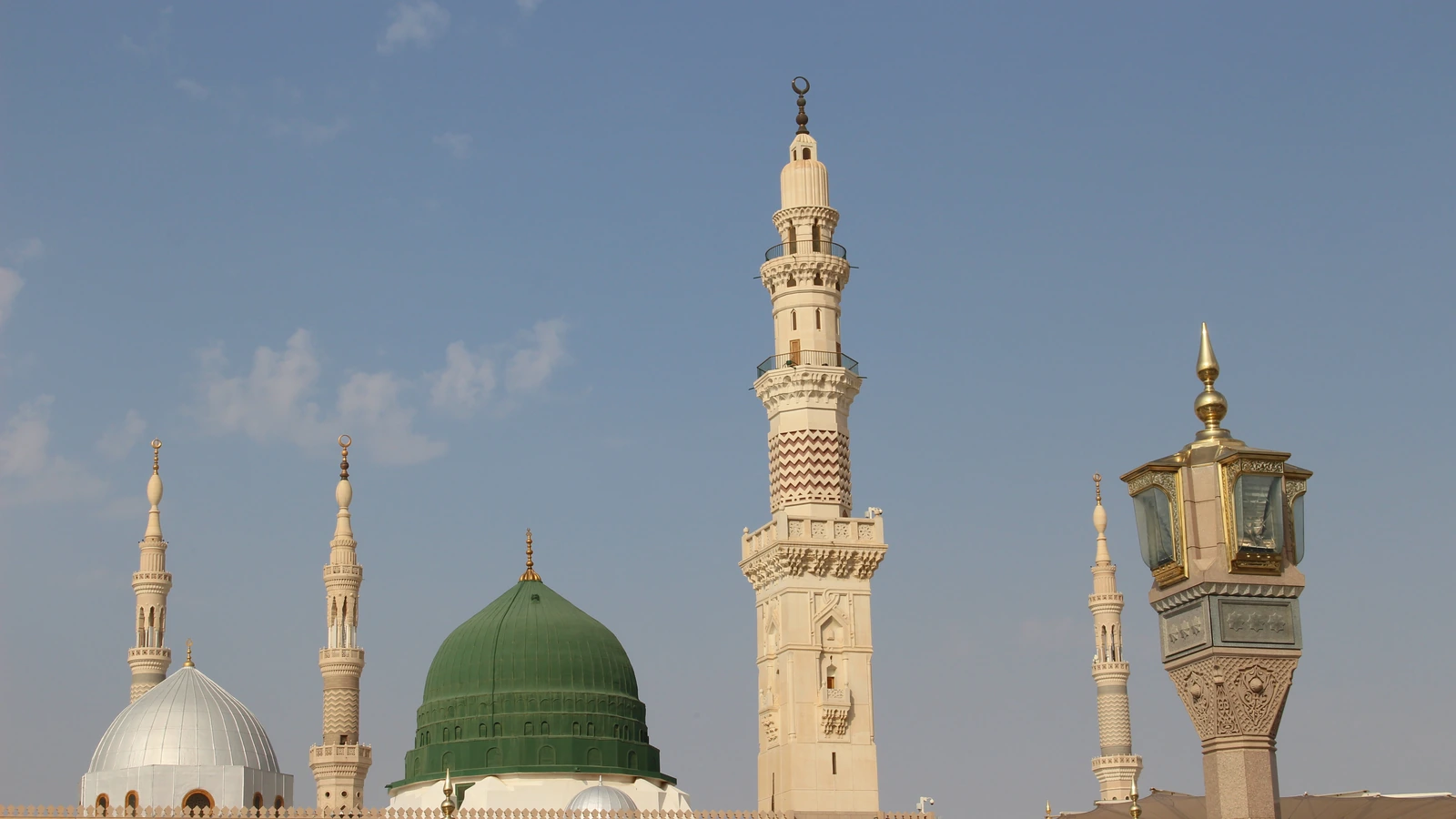
Masjid an-Nabawi, known in English as the Prophet's Mosque, stands in Medina as one of the most cherished and visited sites in the Islamic world. Second in significance only to Masjid al-Haram in Mecca, it holds a unique place in the hearts of Muslims: it was built by the Prophet Muhammad himself, and it is where he is buried.
The Founding of the Mosque
After the Prophet Muhammad and his companions migrated from Mecca to Medina in the event known as the Hijra, one of the very first acts of the newly formed Muslim community was to build a mosque adjoining the Prophet's home. This original structure was simple — a modest open courtyard with a covered area for prayer — but it quickly became the center of religious, social and administrative life for the early Muslim community.
The Green Dome
Perhaps the most recognizable feature of Masjid an-Nabawi today is the Green Dome, which marks the location of the Prophet Muhammad's tomb, situated within what was originally the room of his wife Aisha, adjoining the mosque. Alongside the Prophet, two of his closest companions and successors, Abu Bakr and Umar ibn al-Khattab, are also buried in this same location. The dome, visible from across the city, has become one of the most iconic images associated with Islamic architecture worldwide.
Growth Through the Centuries
What began as a small, simple structure has been expanded and rebuilt many times over the centuries by successive Islamic rulers and, more recently, the Saudi government, transforming it into one of the largest mosques on earth. Its vast prayer halls, courtyards and distinctive retractable umbrellas now accommodate an enormous number of worshippers, particularly during the Hajj season when millions of pilgrims pass through Medina.
Notable Features of the Mosque Complex
| Feature | Significance |
|---|---|
| The Green Dome | Marks the burial place of the Prophet Muhammad |
| Rawdah | An area between the Prophet's former home and pulpit, described in tradition as a garden of Paradise |
| Ten Minarets | Landmarks visible across the city of Medina |
| Retractable Umbrellas | Modern additions providing shade in the mosque's courtyards |
Visiting Masjid an-Nabawi
While visiting Medina is not a formal requirement of Hajj, the overwhelming majority of pilgrims include it in their journey, drawn by the desire to send greetings and prayers at the Prophet's resting place and to pray within the historic mosque itself. Many describe the atmosphere of quiet devotion in Medina as a deeply moving complement to the more intense rites of Hajj in Mecca.
Preparing for Your Own Journey
For travelers heading to Medina and Mecca, thoughtful preparation makes the journey smoother — comfortable modest clothing, a compact prayer setup, and a set of travel-sized, alcohol-free fragrances suited for use during ihram. At Reyhan Esans, our Hajj & Umrah collection is designed with pilgrims' practical needs in mind, alongside the traditional oud, musk and amber notes long associated with these holy cities.
Frequently Asked Questions
What is Masjid an-Nabawi?
Masjid an-Nabawi, the Prophet's Mosque, is the mosque built in Medina originally adjoining the home of the Prophet Muhammad, where he is buried. It is one of the most significant mosques in Islam.
What is the Green Dome?
The Green Dome is the distinctive green-topped dome that marks the location of the Prophet Muhammad's tomb within Masjid an-Nabawi, making it one of the most recognizable features of the mosque.
Is visiting Masjid an-Nabawi part of Hajj?
Visiting Medina and Masjid an-Nabawi is not a formal requirement of Hajj itself, but it is a deeply valued and common part of the pilgrimage journey for most travelers to Saudi Arabia.
How large is Masjid an-Nabawi today?
Masjid an-Nabawi has been expanded many times over Islamic history and today is one of the largest mosques in the world, accommodating vast numbers of worshippers, especially during Hajj season.
Learn more about the history of the Kaaba and Masjid al-Haram and prepare with our Hajj & Umrah bag essentials guide.
With over 35 years of experience serving pilgrims, we share carefully researched content on Islamic history alongside our Hajj & Umrah essentials collection. Reach us anytime via WhatsApp.
Sources & note: This overview reflects widely accepted Islamic historical tradition and is presented at a general, encyclopedic level for informational purposes.
Premium roll-on perfumes, prayer beads, ihram & Hajj-Umrah essentials — since 1991.
Browse the shop →Get 10% off your first order — coupon code: ILK10