
The History of Tesbih: Ottoman Prayer Beads Through the Centuries
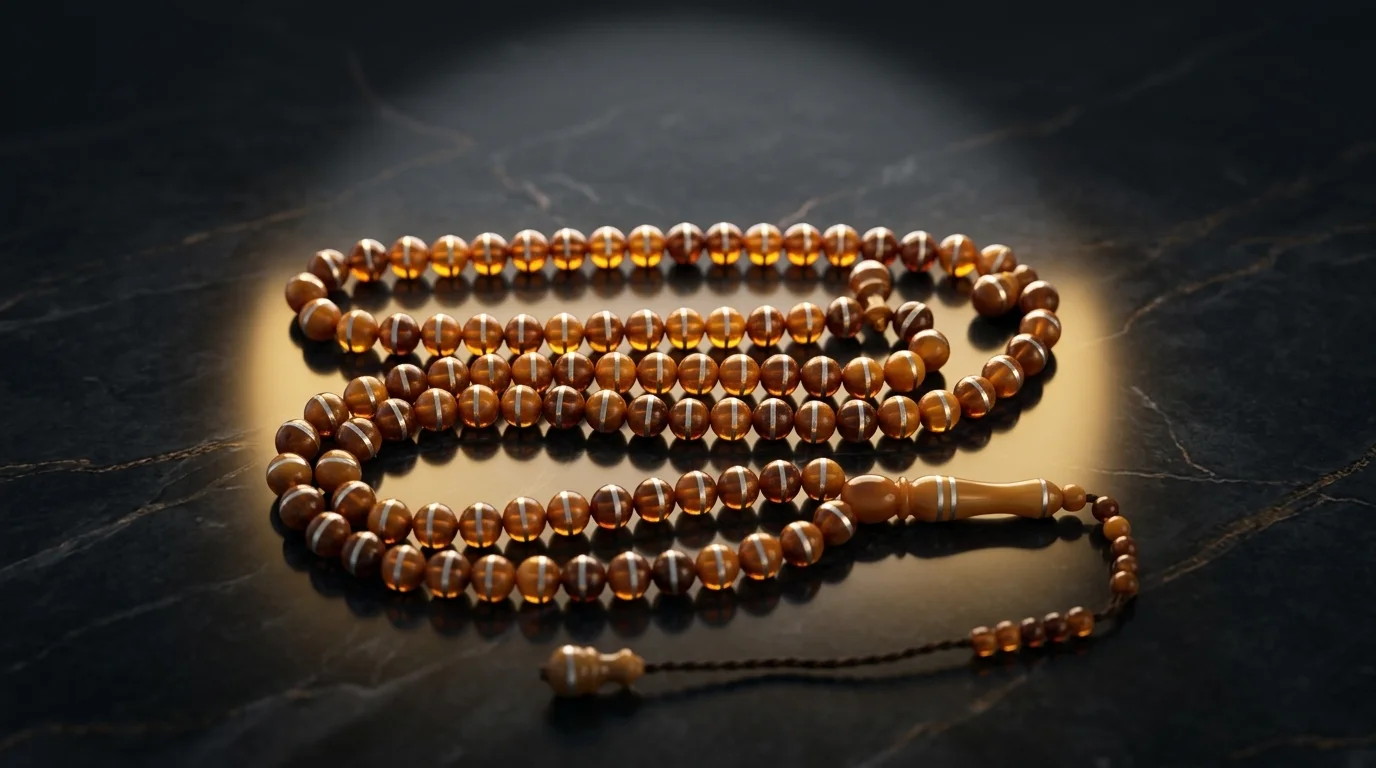
Few everyday objects in Islamic material culture carry as much layered history as the tesbih — the string of prayer beads used to count dhikr, the remembrance of God. What began as a simple counting tool grew, particularly under the Ottomans, into one of the most refined decorative crafts of the era, involving specialized guilds, rare materials and artisans whose sole trade was the making of beads and their fittings. Understanding this history adds real depth to something many of us hold in our hands every day.
Early Origins Before the Ottomans
The practice of counting dhikr repetitions with an aid — whether knotted string, pebbles, or strung beads — predates the Ottoman period and appears in various forms across the early Islamic world. Companions and early Muslims are documented in various historical accounts as having used date pits, small stones or knotted cords to keep count during remembrance. Over the following centuries, as bead-stringing techniques spread across trade routes connecting the Middle East, Central Asia and North Africa, the tesbih gradually took the form most recognizable today: a strand of beads, most often in counts of 33, 99 or 100, corresponding to the recommended cycles of dhikr.
The Ottoman Golden Age of Tesbih Craft
It was under the Ottoman Empire, especially from the 16th century onward, that tesbih-making developed into a truly specialized craft. Istanbul in particular became a center for artisans who dedicated their careers entirely to bead carving, polishing and fitting — a trade organized, like many Ottoman crafts, within its own guild structure with defined standards of quality and apprenticeship.
Sufi lodges (tekkes) played a significant role in popularizing more elaborate tesbih use, since dhikr held a central place in Sufi devotional practice. Sheikhs and dervishes of various orders were often associated with particular styles or materials of tesbih, and gifting a finely made tesbih between teacher and student, or among respected community members, became a meaningful gesture that carried social and spiritual weight beyond its practical function.
Materials Prized by Ottoman Craftsmen
| Material | Character & Appeal |
|---|---|
| Amber (kehribar) | Warm color, light weight, believed by many to develop a pleasant patina with handling |
| Coral (mercan) | Rich red-orange tone, rare and prized as a luxury material |
| Ivory & tortoiseshell | Fine polish, smooth texture, used in high-status pieces |
| Rare woods | Aromatic or richly grained woods, sometimes imported along trade routes |
| Natural seeds (kuka and similar) | More accessible, durable, valued for their distinctive resonant sound |
Beyond the beads themselves, the fittings were an art form in their own right. The tassel, known as the imame, and the metal end caps were frequently crafted by silversmiths specializing exclusively in tesbih fittings — engraved, sometimes gilded, and tailored to complement the bead material. A well-made Ottoman tesbih was, in effect, a small piece of jewelry as much as a devotional tool.
Tesbih as Social and Cultural Object
Beyond the mosque and the Sufi lodge, the tesbih became woven into everyday Ottoman social life. It was common to see men holding and turning a tesbih in coffeehouses, markets and while walking — not always mid-dhikr, but as a familiar, grounding habit that had become part of daily rhythm and identity, much as it remains today across much of the Muslim world.
The materials and craftsmanship of a person's tesbih could also reflect status, taste or occupation, similar to how a fine watch or pen might function today — without diminishing its primary devotional purpose for observant owners.
From Ottoman Workshops to Today
While large-scale artisan guilds no longer operate at the same historical scale, the craft has not disappeared. Specialized workshops, particularly in and around Istanbul, continue hand-finishing tesbih in traditional materials, and collectors actively seek out antique Ottoman-era pieces for their craftsmanship and historical value. Meanwhile, natural materials like kuka seed carry that same appreciation for authentic, non-synthetic materials into modern, everyday, more accessible tesbih.
At Reyhan Esans, our tesbih collection honors this long tradition — offering kuka tesbih in the classic 33, 99 and 100 counts, some finished with silver detailing that echoes the decorative fittings once made by Ottoman-era silversmiths.
Frequently Asked Questions
When did tesbih become popular in the Ottoman Empire?
Prayer beads were already in use across the earlier Islamic world, but during the Ottoman era — particularly from the 16th century onward — tesbih craftsmanship developed into a refined, specialized art form centered in Istanbul, closely tied to Sufi lodges and the palace court.
What materials were used for Ottoman tesbih?
Ottoman craftsmen worked with amber, coral, ivory, rare woods, tortoiseshell, and semi-precious stones, often finishing beads with silver caps, tassels (imame) and decorative fittings made by specialized guild artisans.
Why were tesbih tassels and fittings so elaborately designed?
The tassel (imame) and end caps were often crafted by silversmiths as a distinct art form in themselves, reflecting the owner's status and the era's appreciation for detailed craftsmanship applied even to everyday devotional objects.
Is tesbih craftsmanship still practiced today?
Yes, though on a smaller scale than during the Ottoman peak. Traditional bead-carving and silver tassel work survive in specialized workshops, alongside modern production using natural materials like kuka seed and classic bead counts of 33, 99 and 100.
Want to learn more about tesbih today? See our guides on what is kuka prayer beads and dhikr and prayer bead etiquette.
We continue a tradition of quality tesbih craftsmanship in natural materials. Message us on WhatsApp for recommendations on sizes and finishes.
Sources & references: Historical context reflects widely accepted general accounts of Ottoman craft guild history and Islamic material culture studies; provided for general informational purposes.
Premium roll-on perfumes, prayer beads, ihram & Hajj-Umrah essentials — since 1991.
Browse the shop →Get 10% off your first order — coupon code: ILK10