
Qadiri Tariqa: History & the Tradition of Vocal Dhikr
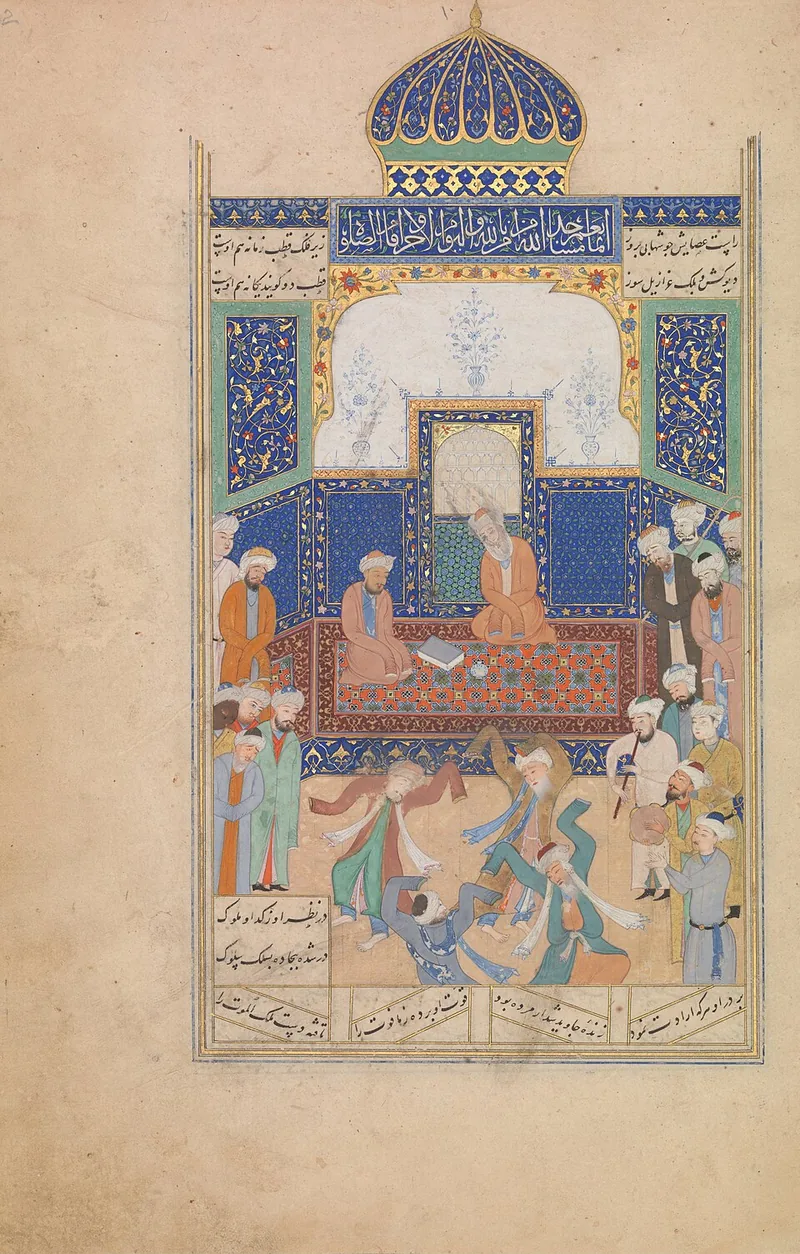
The Qadiri order (Qadiriyya) is often described as one of the oldest formally organized Sufi orders, and one of the most geographically widespread. It is closely associated with a particular style of congregational remembrance known for its vocal, communal character. This article gives a neutral overview of the order's background and its approach to dhikr.
Origins of the Qadiri Order
The order traces its name to a scholar and preacher active in Baghdad during the 12th century CE, whose teaching circle and reputation for piety attracted a wide following during his lifetime. In the generations after his death, his students and their successors formalized his teachings into a structured tariqa, which then spread outward from Baghdad along trade and scholarly routes.
A Widely Spread Tradition
Few orders match the geographic reach of the Qadiriyya. Over the centuries it took root across the Middle East, North and West Africa, the Indian subcontinent, Southeast Asia and the Balkans, often blending with local devotional customs while retaining its core identity. This breadth means that Qadiri practice today can look somewhat different from one region to another, while still tracing back to the same origin.
The Tradition of Vocal Dhikr
One of the most recognizable features associated with the Qadiri order is its emphasis on congregational, often vocal dhikr, frequently performed in a circle (halqa). In many regional expressions of the tariqa, this involves group recitation of specific formulas, sometimes accompanied by controlled, rhythmic movement — a style that stands in contrast to orders emphasizing purely silent, individual remembrance.
- Halqa (circle) gatherings: practitioners often form a circle for collective dhikr sessions.
- Vocal recitation: specific phrases or names of God are repeated aloud, in unison.
- Communal emphasis: the practice reinforces the order's broader focus on brotherhood and shared spiritual experience.
It is worth noting that specific forms of dhikr practice vary considerably between local branches of the Qadiri order, and some communities incorporate additional regional customs alongside the shared core tradition.
Dhikr, Counting and Prayer Beads
As in most Sufi orders, prayer beads are a common practical companion to dhikr — whether performed vocally in a group or silently and individually. A 99 or 100-count strand allows practitioners to keep an accurate count through longer remembrance cycles, a small but well-established piece of dhikr etiquette shared broadly across the Islamic world, well beyond any single tariqa.
The Qadiri Order Today
The Qadiriyya remains an active, living tradition with millions of adherents and numerous branches worldwide. As with any long-running tradition spanning many centuries and regions, local practice can differ meaningfully from community to community, while sharing a common historical root and a broadly recognized approach to remembrance and spiritual training.
Frequently Asked Questions
Who is the Qadiri order named after?
The Qadiri (Qadiriyya) order takes its name from a 12th-century Baghdad-based scholar and preacher whose teaching circle became the basis for one of the earliest formally organized Sufi orders.
What is distinctive about Qadiri dhikr practice?
The Qadiri tradition is widely associated with congregational, often vocal dhikr performed in a circle (halqa), sometimes accompanied by rhythmic movement, distinguishing it from orders that favor purely silent remembrance.
Where is the Qadiri order practiced today?
The Qadiri order is one of the most widely distributed Sufi orders, with a historical and continuing presence across the Middle East, North and West Africa, South Asia, Southeast Asia, and the Balkans.
Is the Qadiri order the oldest Sufi tariqa?
It is commonly regarded as one of the oldest formally organized Sufi orders, though Sufism as a broader spiritual tradition predates the formation of any specific tariqa.
Continue reading with our guides on dhikr and prayer bead etiquette and the history of the Naqshbandi order.
We produce neutral, well-sourced educational content on Islamic heritage alongside our 35 years of experience crafting prayer beads, fragrances and Hajj & Umrah essentials. Reach us on WhatsApp for any questions.
Sources & references: This article presents widely-accepted, general historical information about the Qadiri order. It avoids disputed dates, unverifiable chains of transmission and any comparative or sectarian claims.
Premium roll-on perfumes, prayer beads, ihram & Hajj-Umrah essentials — since 1991.
Browse the shop →Get 10% off your first order — coupon code: ILK10